Turn Your Smartphone into a 200g Steam Deck: The Rise of 'DroidDeck'
📌 Discover DroidDeck: The open-source project bringing SteamOS and Proton to Android. A deep dive into how it turns your smartphone into a lightweight S
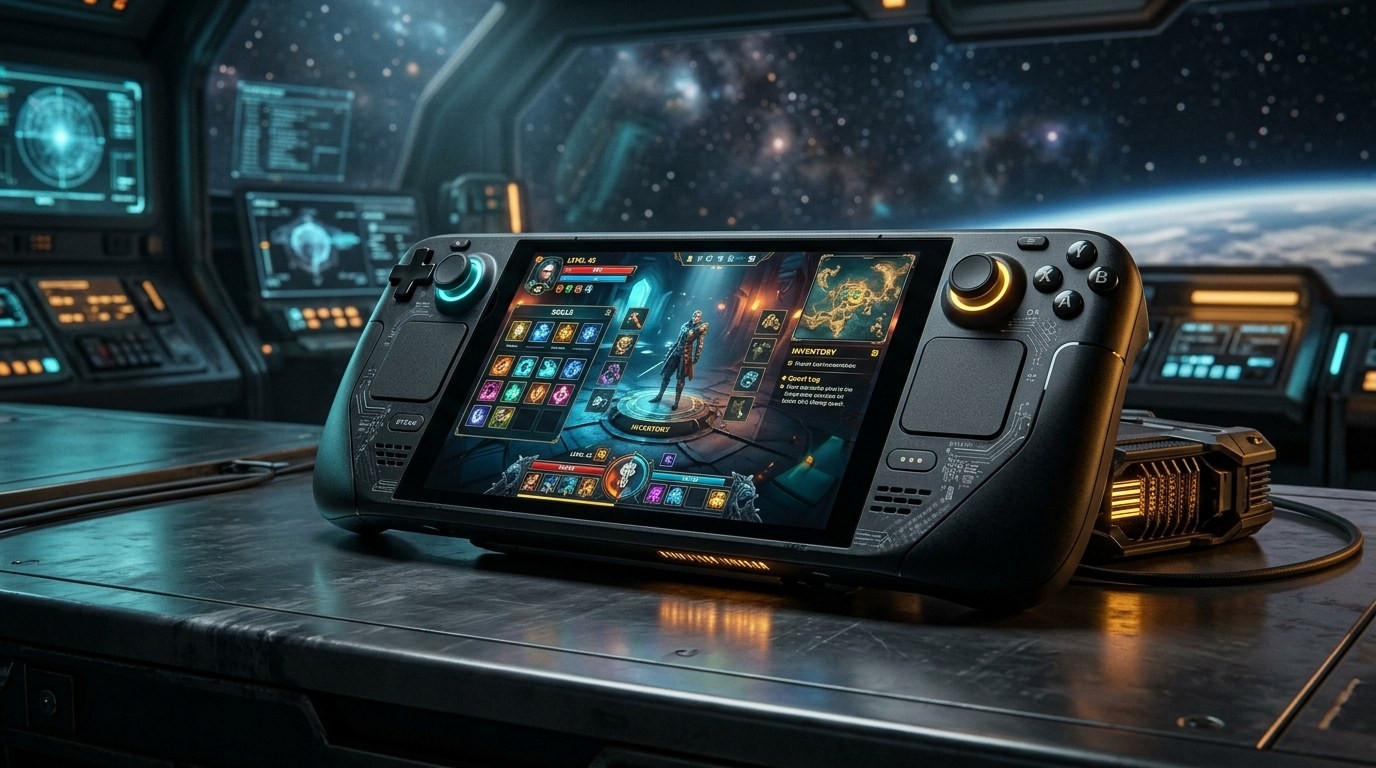
Valve’s Steam Deck fundamentally disrupted the UMPC (Ultra-Mobile PC) market, bringing the vast Steam library out from behind heavy desktop PCs and into the palms of our hands. However, its significant weight—well over 650g—and bulky footprint remain a hurdle for true portability.
Enter 'DroidDeck', the open-source project currently setting the global developer community ablaze. Unlike cumbersome PC mirroring or cloud streaming solutions plagued by latency, DroidDeck is an innovative app that allows you to run Steam games locally on your existing Android smartphone or tablet, effectively turning your daily driver into an ultra-lightweight Steam Deck. In this article, we analyze how Valve’s core technologies—SteamOS and Proton—have been ported to Android, and provide a comprehensive comparison between the official Steam Deck and the DroidDeck gaming experience.
Q. What are the core technologies behind the Steam Deck and DroidDeck?
💡 Executive Summary: The heart of the Steam Deck—SteamOS, the Gamescope compositor, and the Proton compatibility layer—has been integrated into the Android Linux environment via DroidDeck. High-speed emulation (FEX-Emu) and open-source Vulkan drivers (Turnip) enable native-like local execution.
Valve’s success with the Steam Deck wasn't just about hardware; it was about SteamOS, a console-like operating system, and Proton, which translates Windows-exclusive DirectX games into Linux-native Vulkan code in real-time.
DroidDeck brings this entire software stack into the Android mobile ecosystem:
- Official Linux ARM64 Steam Client: Rather than a third-party launcher, it runs Valve’s official Linux ARM64 Steam client within a lightweight PRoot Linux sandbox on Android at near-native speeds.
- Steam Big Picture & Desktop Mode (KDE): It renders the Gamescope-based 'Big Picture Mode' 1:1 on your Android screen, providing the familiar tile-based library, controller navigation, and even the KDE Plasma desktop environment.
- FEX-Emu + Proton Hybrid Engine: To run x86-64 PC games on mobile processors (ARM64), it utilizes FEX-Emu, a high-speed binary translator, combined with Valve’s ARM64 Proton layer.
- Open-Source Turnip Vulkan Driver Acceleration: By leveraging the open-source Mesa Turnip driver, which interfaces directly with Qualcomm Snapdragon Adreno GPUs, it pushes mobile chipsets to their graphical limits.
📋 [Official Valve Steam Deck vs. DroidDeck Smartphone Comparison]
| Feature | Valve Steam Deck LCD | Valve Steam Deck OLED | DroidDeck-Enabled Smartphone (Flagship) |
|---|---|---|---|
| Weight | ~669g (Wrist fatigue over time) | ~640g (Slightly lighter) | ~200–230g (~380g with controller; 50% of Steam Deck) |
| Display | 7.0" IPS LCD (1280x800, 60Hz) | 7.4" HDR OLED (1280x800, 90Hz, 1,000 nits) | 6.7–6.8" Dynamic AMOLED (3120x1440 QHD+, 120Hz) |
| Processor | AMD Custom Zen 2 + RDNA 2 | AMD Custom 6nm Zen 2 + RDNA 2 | Qualcomm Snapdragon 8 Gen 2 / Gen 3 / 8 Elite |
| OS & Runtime | Valve SteamOS 3.0 (Arch Linux) | Valve SteamOS 3.0 (Arch Linux) | Android 9+ via PRoot + FEX-Emu + Proton + Turnip |
| Compatibility | Top Tier (Verified) | Top Tier (Verified) | Excellent for Indie/Light 3D (Expanding compatibility) |
| Battery | 40Wh (TDP 4–15W) | 50Wh (TDP 4–15W) | 5,000mAh (TDP 5–10W mobile efficiency) |
| Controls | Dual sticks, trackpads, 4 back buttons | Dual sticks, trackpads, 4 back buttons | Touchscreen or Backbone/Razer Kishi controllers |
| Portability | Requires dedicated case | Requires dedicated case | Pocketable, everyday carry |
Q. What are the unique advantages of using DroidDeck over a Steam Deck?
💡 Executive Summary: The primary advantages are the ultra-lightweight form factor (200g range), stunning high-resolution 120Hz AMOLED displays, and the convenience of having a gaming console in your pocket at all times.
While the Steam Deck is a polished, purpose-built device, its 600g+ weight can strain wrists during long sessions. DroidDeck offers distinct advantages:
- Extreme Lightweight Design: Modern smartphones weigh just over 200g. Even with a telescopic controller (approx. 150g), the total weight is roughly 350–380g—40% lighter than the Steam Deck, making it perfect for long, comfortable sessions.
- Superior Display Quality: While the Steam Deck is capped at 800p, smartphones offer QHD+ (3K) resolution, 120Hz refresh rates, and high-contrast HDR Dynamic AMOLED panels, providing vastly better text clarity and pixel-art rendering.
- Tablet Integration: Pairing DroidDeck with an 8.8-inch or 11-inch gaming tablet creates a massive, portable UMPC experience that dwarfs the Steam Deck’s 7.4-inch screen.
Q. Hardware Requirements and Setup Tips for DroidDeck
💡 Executive Summary: A Snapdragon 8 Gen 2 or higher flagship, a dedicated mobile controller (Backbone/Kishi), and Android developer option optimizations are essential for a smooth experience.
1. Qualcomm Snapdragon AP Recommended
The Turnip Vulkan driver is optimized for Qualcomm Adreno GPUs (Adreno 700 series and up). MediaTek or Exynos chips may face compatibility issues, so devices like the Galaxy S23/S24/S25 series or OnePlus flagships are ideal.
2. Disable Android Process Restrictions
To prevent Android’s 'Phantom Process Killer' from terminating DroidDeck’s background Linux processes, enable 'Disable child-process restrictions' in Developer Options or run the corresponding ADB command.
3. Use Integrated Mobile Controllers
For complex 3D games, a Type-C controller like the Backbone One, Razer Kishi V2, or Gamesir G8 Galileo is essential for zero-latency, console-grade controls.
4. Game Selection Strategy
Start with 'Deck Verified' 2D/2.5D titles like Vampire Survivors, Dave the Diver, Hades, or Hollow Knight. These run at a smooth 60fps with minimal heat and battery drain, providing the best initial experience.
Q. Conclusion: The Future of Portable Gaming
💡 Executive Summary: DroidDeck is a landmark open-source project that breaks down the barriers between mobile devices and PC gaming, turning your existing smartphone into a Steam console without the need for expensive new hardware.
While x86 emulation still faces challenges with high-end AAA titles, the rapid evolution of FEX-Emu, Proton, and mobile AP performance makes DroidDeck an increasingly compelling solution. If you want to enjoy your Steam library on the go without the bulk of a dedicated handheld, DroidDeck is the future you can install today.
#SteamDeck #DroidDeck #SteamOS #Proton #MobileGaming #Snapdragon #UMPC #OpenSource


Comments
Post a Comment