From 2D Photo to 3D Asset in 60 Seconds: Inside Meshy-7 and Image-to-3D AI
📌 Discover how Meshy-7 and modern Image-to-3D AI revolutionize game development and 3D design by turning 2D photos into production-ready assets in 60 se
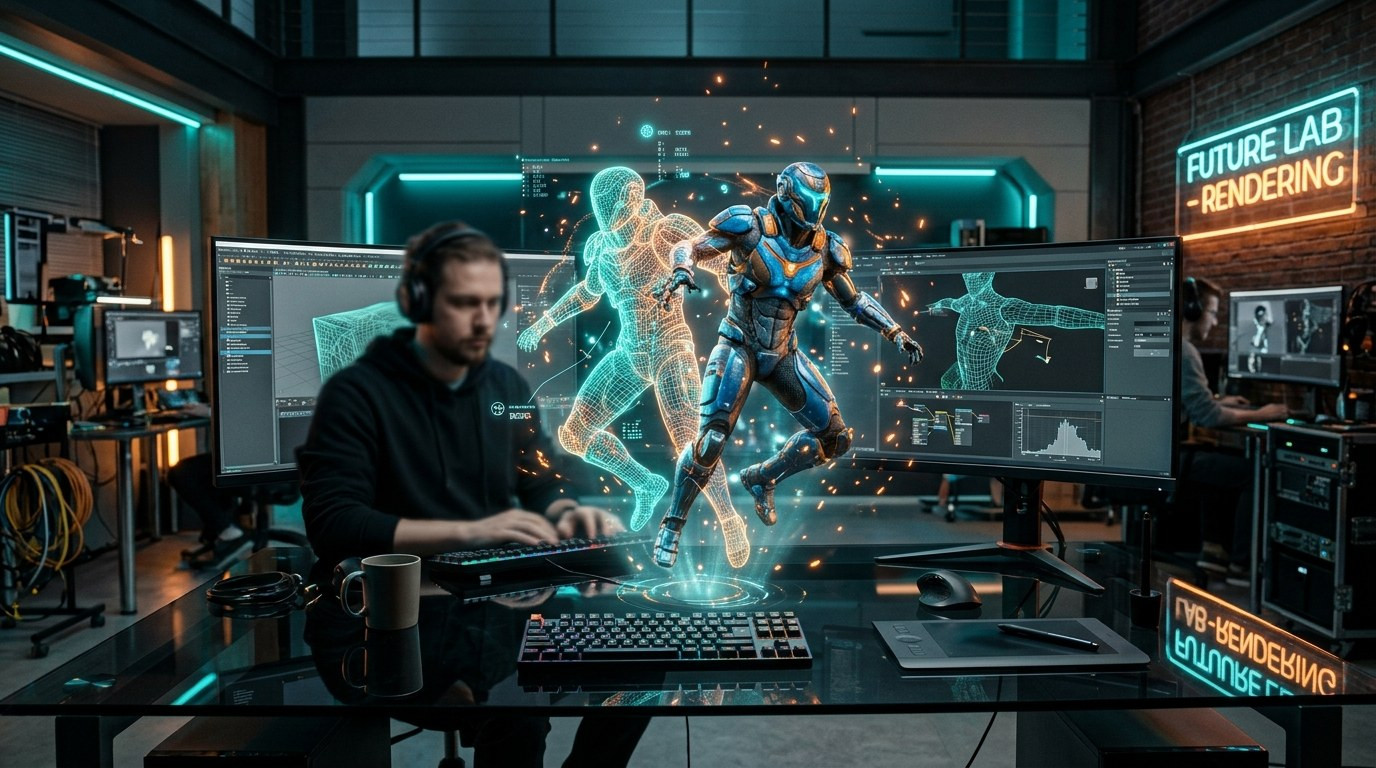
Following in the footsteps of 2D image-generation AIs like Midjourney and Stable Diffusion, which completely shook up digital art worldwide, the frontline of generative AI is now rapidly expanding into the 'three-dimensional space'. By simply uploading a single flat photo, illustration, or character concept sketch, creators can now harness 'Image-to-3D' technology that transforms 2D inputs into 3D meshes with perfect 360-degree volume and high-definition textures in just 60 seconds.
In particular, Meshy-7, the latest architecture from industry pioneer Meshy AI, completely overcomes the spaghetti geometry and blurry textures that once plagued AI-generated 3D models. It is fundamentally transforming the practical workflows of game developers, 3D printing makers, and metaverse creators. This article takes a deep dive into the underlying mechanics of modern Image-to-3D technology led by Meshy-7, compares specifications across major global platforms and open-source models, and analyzes its broader impact on the 3D graphics industry.
Q. What is the Core Mechanics of Image-to-3D Technology, and What Innovations Did Meshy-7 Deliver?
💡 Executive Summary: Modern Image-to-3D combines Multi-View Diffusion—which imagines and reconstructs the unseen back and sides from a single flat image—with Large Reconstruction Models (LRMs) that synthesize ultra-fast 3D meshes. Notably, Meshy-7 separates modeling (geometry) from texturing, applying 4K PBR and smart topology to achieve production-ready quality fit for immediate deployment in game engines.
Generating a 3D volumetric model from a single flat photo is a mathematically rigorous inverse problem. The AI must infer the unseen backsides, hidden shadows, and reflections that the camera never captured. The latest Image-to-3D pipeline tackles this across three distinct phases:
1. Multi-View Diffusion: Amplifying 360-Degree Perspectives
When a user inputs a 2D image, the model analyzes the geometric symmetry and context of the object, consistently generating 6 to 8 multi-angle view images in real-time, covering the front, left, right, back, top, and bottom. This phase leverages AI's generative imagination to impeccably fill in any occlusions.
2. High-Speed 3D Reconstruction (LRMs & 3D Gaussian Splatting)
Taking the multi-view images as input, the pipeline synthesizes a 3D mesh volume composed of millions of triangles in just 10 to 30 seconds. Unlike legacy NeRF (Neural Radiance Fields) methods that required tens of minutes of rendering time, cutting-edge 3D Gaussian Splatting (3DGS) and transformer-based LRM architectures dramatically shorten generation times.
3. The Decisive Difference in Meshy-7: Complete Separation of Geometry and Texture & 4K PBR
Early 3D AI models generated geometry and textures simultaneously as a single lump, frequently resulting in warped edges and bumpy surfaces. In contrast, the latest Meshy-7 introduces these powerful professional capabilities:
- Two-Step Separation Pipeline: It securely establishes the skeletal geometry first before independently mapping high-resolution textures, maximizing the precision of both form and feel.
- 4K Ultra PBR Texture Map Support: Beyond basic albedo color, it automatically generates normal maps, roughness maps, and metallic maps to capture surface curvature, allowing assets to seamlessly receive real-time lighting effects in Unreal Engine 5 or Unity.
- Smart Quad Remeshing: It automatically reorganizes messy triangular polygons into clean quad polygons, providing an ideal mesh flow that 3D artists can instantly tweak in Blender or Maya.
📋 [Comprehensive Comparison of 4 Global Image-to-3D Platforms & Open-Source Models]
| Comparison Criteria | Meshy AI (Meshy-7) | Tripo3D (Tripo 2.5) | Luma Genie (Luma AI) | Tencent Hunyuan3D |
|---|---|---|---|---|
| Core Positioning | All-in-one 3D generator tailored for game dev and indie studios | Ultra-fast draft preview and real-time concepting tool | NeRF/Gaussian Splatting-based cinematic visuals | Foundation open-source 3D model released by Tencent |
| Generation Time | ~60 seconds (Draft preview in 15s) | ~8–10 seconds (Industry-leading ultra-fast speed) | ~30–45 seconds | Depends on hardware specs (Local GPU execution) |
| Mesh Structure & Topology | Smart Quad Remeshing & Excellent Cleanup | Mainly polygonal triangles (Good detail) | Organic mesh-focused (Smooth surfaces) | High-density polygon mesh (Precise geometry) |
| Texture Quality | Up to 4K PBR Textures (Normal/Rough/Metal) | PBR texture support (Vibrant colors) | High-quality textures (Photorealistic) | High-resolution texture baking support |
| Killer Features | Humanoid Auto-Rigging & Animation Presets | Rapid multi-variation generation | Precise prompt-binding tuning | 100% free open-source weights (Hugging Face) |
| Export Formats | FBX, OBJ, GLB, USDZ, STL (3D Printing) | FBX, OBJ, GLB, STL | GLTF, OBJ, USDZ | OBJ, GLB, PLY |
| Pricing & Accessibility | Premium SaaS (Free credits + Paid subscription) | SaaS (Free credits provided) | Free-to-try web platform | 100% Free local open-source (Commercial use allowed) |
Q. How Are Game Development and 3D Design Workflows Transforming?
💡 Executive Summary: The traditional, high-cost manual 3D pipeline that used to take days or weeks per asset (Sculpting → Retopology → UV Unwrapping → Texture Painting) has shifted to an ultra-fast 'AI prototyping' era where assets are completed in under a minute.
The traditional 3D asset creation workflow has long been the most labor-intensive and time-consuming bottleneck in the gaming industry. After a concept artist drew a 2D sketch, a 3D modeler had to sculpt it in ZBrush like clay, run retopology to reduce polygon count, unwrap UV coordinates like a sewing pattern, and paint textures in Substance Painter.
The maturation of Image-to-3D technology has entirely compressed this complex pipeline:
- 90% Production Cost Reduction for Indie Studios: Small development teams and solo creators can generate infinite 3D drafts of in-game weapons, furniture, environmental props, and NPC characters in minutes using just a single concept drawing.
- Instant Playability via One-Stop Auto-Rigging: Platforms like Meshy-7 natively provide 'auto-rigging' that automatically embeds skeletal joints into humanoid 3D characters. Creators can download FBX files pre-loaded with Mixamo-style animations (walking, running, jumping) and drag-and-drop them directly into Unreal Engine or Unity as playable characters.
- Democratization of 3D Printing and Physical Figurine Production: Even individuals unfamiliar with professional 3D modeling tools (CAD, Blender) can extract STL files from a child's drawing or a pet photo to print physical figurines using a 3D printer.
Q. Current Limitations and Future Challenges of Image-to-3D Technology
💡 Executive Summary: Achieving CAD-level dimensional precision for mechanical parts, natural deformations in complex joint areas, and rendering transparent or glass materials remain technical hurdles.
Despite dazzling advancements, certain limitations still prevent AI-generated assets from being dropped straight into top-tier AAA productions without manual editing:
- Ultra-Precise Hard-Surface & Symmetry: While vastly improved in Meshy-7, precision engineering parts where a 0.01mm error is unacceptable—such as bolt-and-nut assemblies or car engine components—still require manual CAD corrections.
- Complex Scenes & Object Separation: When an image contains multiple intertwined characters or a complex background, segmentation capabilities to cleanly isolate single objects require further refinement.
- Ethical Copyright Concerns of AI Assets: The provenance and commercial licensing issues of the 3D datasets used for training remain institutional challenges that global studios must address before adopting AI 3D assets in commercial titles.
#ImageTo3D #Meshy #Meshy7 #Generative3D #Tripo3D #Hunyuan3D #LumaAI #UnrealEngine #GameDev #3DPrinting #Metaverse


Comments
Post a Comment